Not every implant case is the same. When bone is missing or the case is complex, who operates matters as much as the implant. I explain what a maxillofacial surgeon solves that a general dentist does not, and how we handle these cases in Medellín.
Who operates matters as much as the implant
When someone searches for a "maxillofacial surgeon in Medellín," it is almost never out of curiosity. It is usually because they have a case that went beyond the simple: several missing teeth, being told "there is no bone," a wisdom tooth causing trouble, or the need for a full rehabilitation. And in all of those cases there is a truth I want to tell you clearly: the implant brand matters, but who plans and performs the surgery matters just as much or more.
In this article I explain what a maxillofacial surgeon solves that a general dentist does not, when you truly need one, and how we handle these cases in my practice, with honesty about who does what.
What a maxillofacial surgeon solves (that a general dentist does not)
A general dentist is ideal for simple treatments, and the right thing is to refer anything more complex to the specialist. An implant raises that complexity: it is not a procedure to place in a general consultation, because your lifelong result depends on its planning. That is why an implant case is solved as a team. In my interdisciplinary team, the maxillofacial surgeon is the one who performs the complex surgical procedures:
- Zygomatic and subperiosteal implants: the solution for jaws without bone, when there is nowhere left to anchor a conventional implant. See a subperiosteal implant case and the zygomatic implants page.
- Sinus lift and bone grafts: preparing the terrain when there is not enough bone to place implants.
- Wisdom tooth and complex extractions: extractions that require a surgical approach.
- Orthognathic surgery: repositioning the jaws when there is a skeletal discrepancy that orthodontics alone cannot fix.
- Buccal fat removal (bichectomy): surgery to reduce cheek volume and refine the facial contour.
- Botox for bruxism: applied to the masseter muscles to relax clenching force and protect your teeth and prosthetics from wear.
"They told me I have no bone": it is almost never the end
It is one of the phrases I hear most, often from someone resigned to wearing a removable denture forever. I want you to know something: being told there is no bone somewhere else does not always mean there is no solution. There are bone grafts, sinus lifts and, in the most compromised jaws, zygomatic implants anchored in the cheekbone that avoid grafting. The right step is to evaluate your real case with a 3D scan before any decision.
How we handle these cases in Medellín
Here I am transparent about roles, because in healthcare that matters, and because the order in which things are done defines the result. As an oral rehabilitation specialist, I first evaluate you and plan the prosthesis: how your final teeth will look, in function and esthetics. The surgery is planned from that design, because the position of each implant must be perfect to achieve the esthetic result, it is not enough for the implant to simply fit the bone. With that plan, the maxillofacial surgeon in my interdisciplinary team performs the complex surgical part of maxillofacial surgery. It is not the surgeon on one side and the prosthesis on the other: the prosthesis guides the surgery.
What now?
If you have a complex case or were told nothing could be done because of missing bone, do not settle for that answer without a second opinion with imaging. Message me on WhatsApp, tell me about your case and, if you have a recent scan or X-ray, we will review it to tell you honestly whether you are a candidate and what the plan would be.
Frequently asked questions
▸When do I need a maxillofacial surgeon for my implants instead of a general dentist?
A general dentist is ideal for straightforward treatments, and the right thing is for them to refer complex cases to a specialist. An implant already raises the level of complexity, so it is not a general practice procedure: it is handled as a team. The oral rehabilitation specialist evaluates and plans the prosthesis, and with that plan the maxillofacial surgeon performs the surgery in the exact position. The greater the complexity and the less bone there is, the more that joint work matters.
▸Can I get implants if I was told I have no bone?
In many cases yes. Being told elsewhere that there is "no bone" does not always mean there is no solution: there are bone grafts, maxillary sinus lifts and, in severely resorbed jaws, zygomatic implants anchored in the cheekbone. The right approach is to evaluate your case with a 3D scan before giving you a definitive no.
▸What does a maxillofacial surgeon do that a general dentist does not?
They handle surgical procedures beyond general dentistry: zygomatic and subperiosteal implants for jaws without bone, sinus lifts and bone grafts prior to implants, wisdom tooth removal and complex extractions, orthognathic surgery, buccal fat removal and Botox for bruxism. That training is what provides safety precisely in the cases where treatment can most easily become complicated.
▸How much does maxillofacial surgery cost in Medellín?
It depends on the procedure and the type of anesthesia: a surgical extraction does not cost the same as a bone graft prior to implants or orthognathic surgery. The exact figure is defined at the evaluation with diagnostic imaging. As a general reference, the same procedure in Medellín costs a fraction of what it costs in the United States.
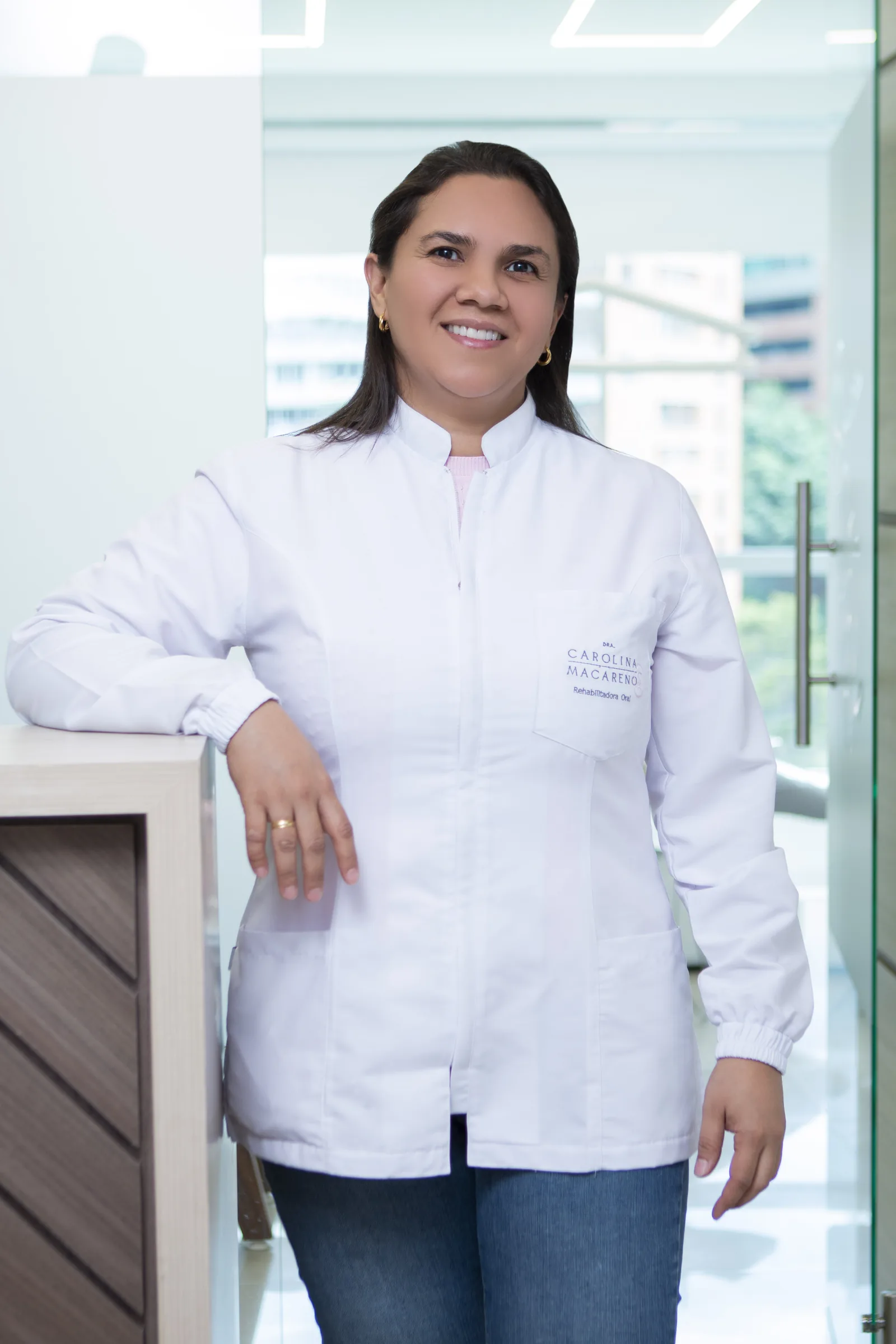
Dra. Carolina Macareno
Rehabilitadora Oral · Especialista en Implantes
Oral Rehabilitation specialist from Universidad CES. Over 17 years transforming smiles in Medellín, Colombia.
Do you have questions about this topic?
Book a diagnostic consultation and we will resolve all your questions in a personalized way.