Subperiosteal Implants in Medellín:
fixed teeth without a bone graft
When there isn't enough bone for conventional implants, there is a precise, definitive alternative. Here I explain what a subperiosteal implant is, how it differs from a zygomatic implant and when it's indicated, and I walk you through a real case documented step by step at our clinic in El Poblado, Medellín.

Dr. Carolina Macareno
Oral Rehabilitation Specialist · Implantologist · 17+ years of experience
Medellín, Colombia
2025
What is a subperiosteal implant?
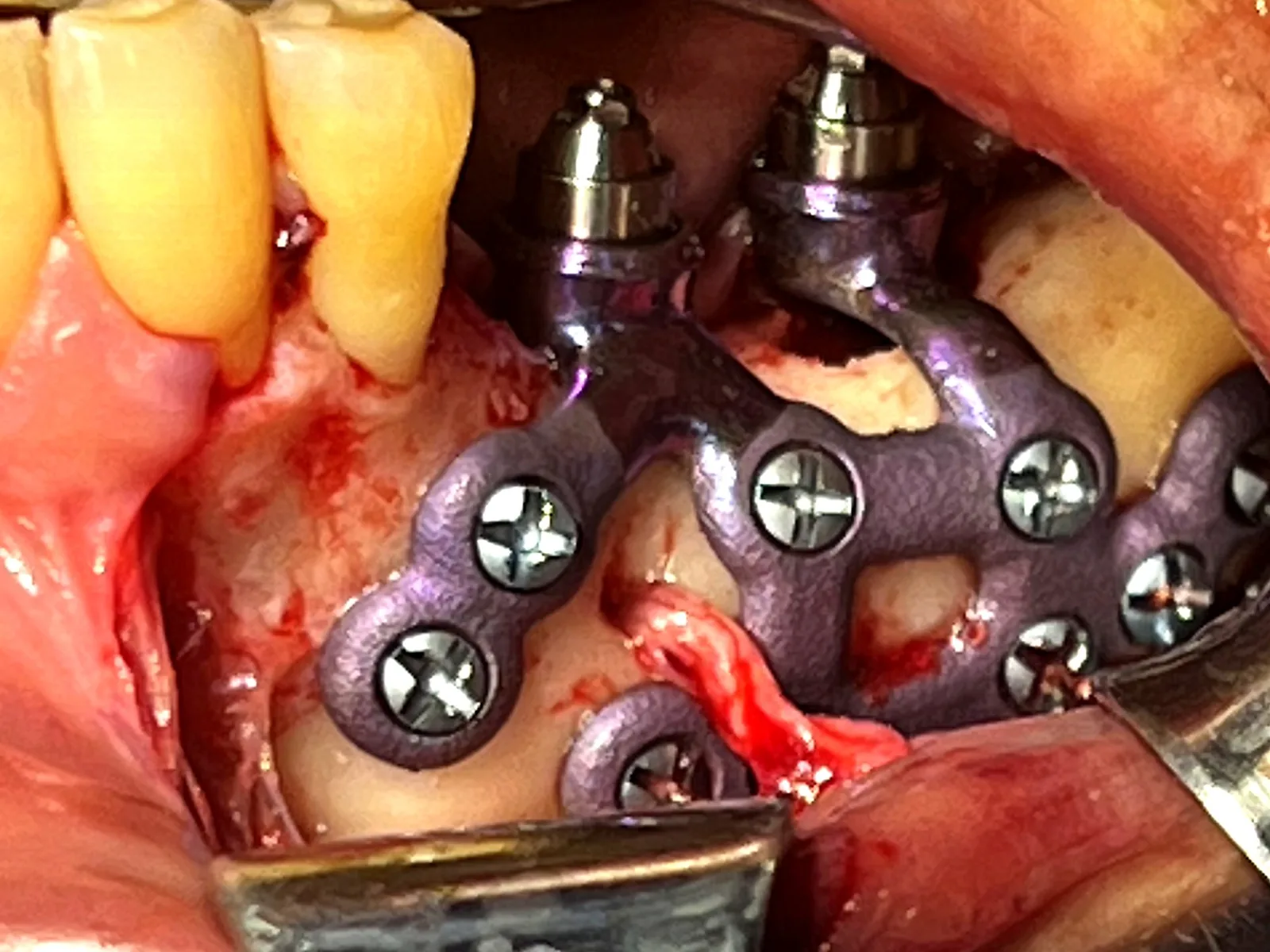
A subperiosteal implant is a titanium device custom-made to fit your bone that, instead of being inserted inside the bone like a conventional implant, rests on top of the bone surface, under the periosteum (the membrane that covers it). It is custom-designed from a 3D scan, so no two subperiosteal implants are alike. It's the option indicated when bone loss is so severe that there is nowhere left to anchor a traditional implant, and a bone graft either isn't viable or the patient doesn't want to go through months of waiting.
Subperiosteal and zygomatic are not the same thing
It is a common mix-up, but they are two different solutions for "I have no bone." A zygomatic implant anchors into the cheekbone and is exclusive to the upper jaw. A subperiosteal implant rests on top of the bone, is custom-made, and works for both the upper jaw and the lower jaw (mandible), where a zygomatic implant does not apply. Which one is right for you depends on your anatomy, and that is only defined with an assessment and 3D diagnosis.
Subperiosteal
Custom-made, rests on top of the bone. Works for both the upper and lower jaw. Ideal when there is no bone and a graft is not an option.
Zygomatic
Anchors into the cheekbone. Upper jaw only. You can see the zygomatic implants page.
Who is a candidate?
- You were told you don't have enough bone for conventional implants.
- You have severe bone loss in the upper or lower jaw.
- A bone graft isn't viable because of your age, your general health, or because you don't want to wait months.
- You have worn a loose removable denture for years and want fixed teeth.
- You had a previous graft or implants that failed.
Full surgery video, coming soon
From conscious sedation with an anesthesiologist to provisionalization.
The entire process documented on video.
The procedure, step by step
Consultation and Diagnosis
A 67-year-old patient with partial mandibular edentulism and severe bone loss. Panoramic X-rays and a cone beam CT scan confirmed that the remaining bone was insufficient for conventional implants, and that a bone graft was not viable given the patient's age and overall health.
3D Digital Planning
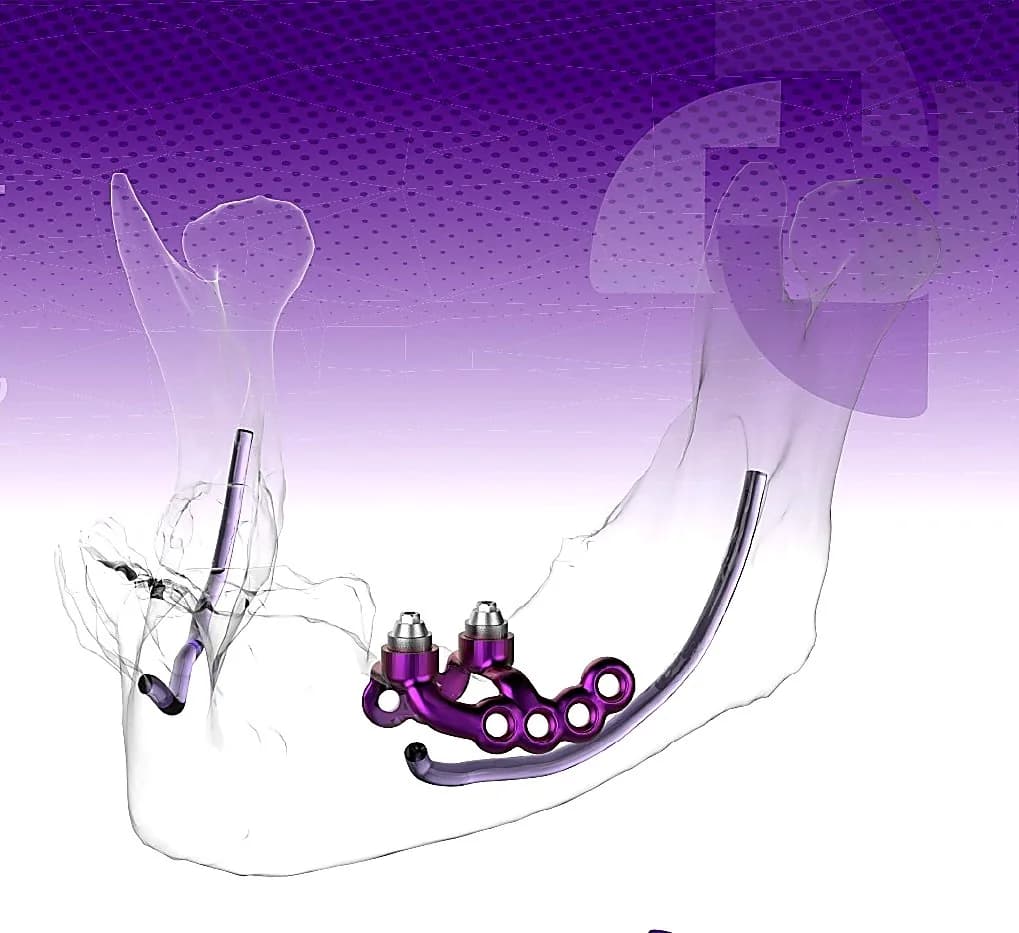
From the CBCT (cone beam CT scan), the subperiosteal implant was digitally designed. The titanium device is fully custom-made to fit the unique anatomy of the patient's jaw. No two subperiosteal implants are alike.
Preparation: Conscious Sedation
The procedure was performed under conscious sedation supervised by an anesthesiologist. The patient stays relaxed, pain-free and cooperative throughout the surgery. This approach is ideal for complex procedures: it removes anxiety, improves the patient experience and allows the surgical team to work with greater precision.
Implant Placement
Under a sterile surgical field and conscious sedation, an incision is made and the jawbone is exposed. The subperiosteal implant, already custom-made, is positioned directly on top of the bone and secured with titanium screws. The emergence posts are left ready to receive the prosthesis.
Post-Surgical Result
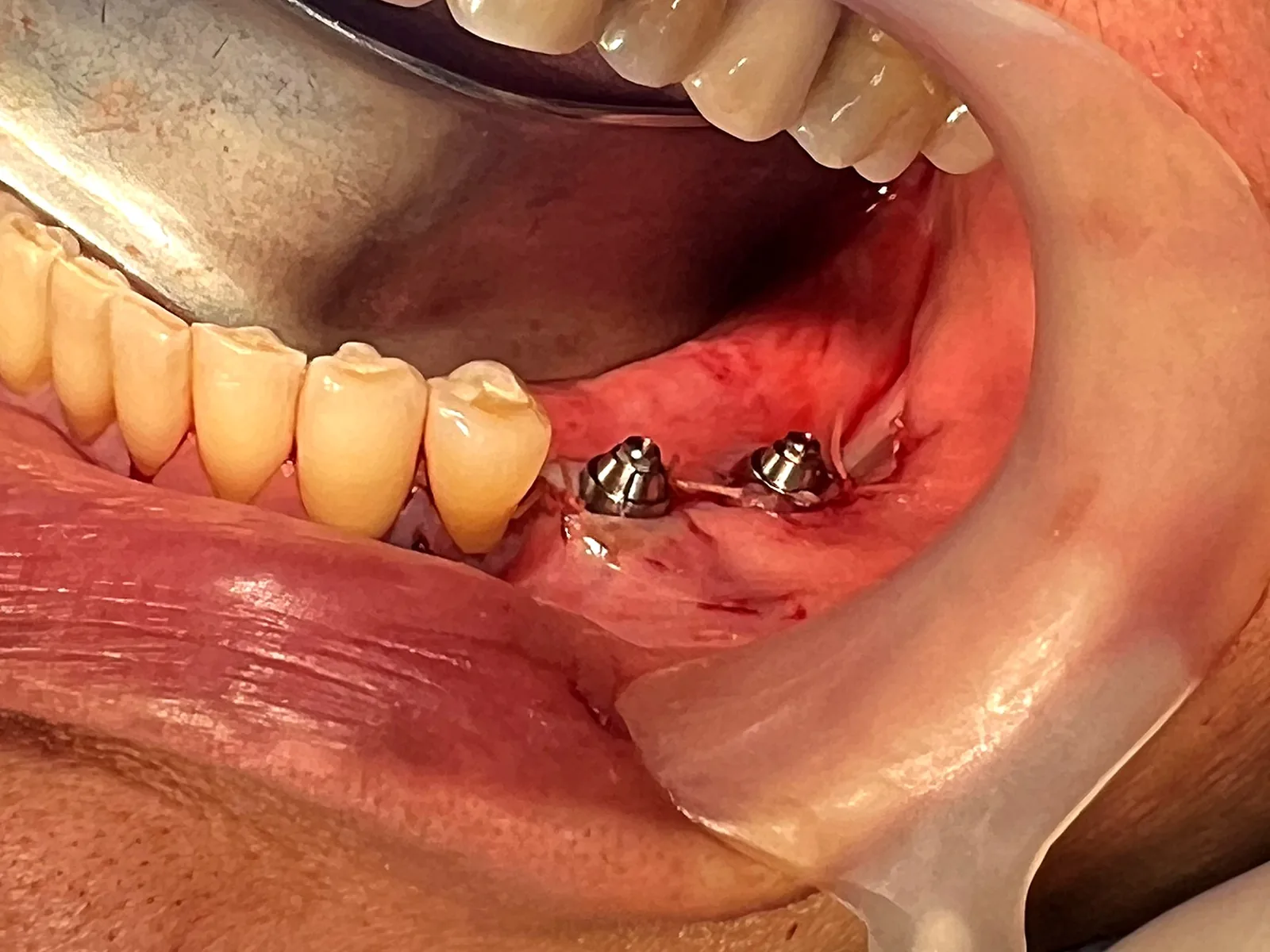
Once the surgical site is closed, the implant posts emerge through the gum, ready to receive the provisional prosthesis during the same session or within the first 48 hours. The patient leaves the office with teeth. The definitive esthetic result is achieved around 3 to 4 months later.
90–120min
Surgical time
0grafts
No bone graft
1session
Provisionalization
97%+success
Integration rate
Frequently asked questions
▸What's the difference between a subperiosteal and a zygomatic implant?
They are two different solutions for when there is no bone. A zygomatic implant anchors into the cheekbone and only works for the upper jaw. A subperiosteal implant is custom-made and rests on top of the bone, and can be used in both the upper jaw and the lower jaw. Which one is right for you depends on your anatomy and is defined with a 3D diagnosis.
▸Can I still get implants if I was told I don't have enough bone?
Yes. The subperiosteal implant is designed precisely for patients with severe bone loss who were told they "have no bone" for conventional implants. By resting on top of the bone instead of being inserted inside it, it avoids the bone graft and the months of waiting that a graft requires.
▸Does a subperiosteal implant need a bone graft?
No. That's its main advantage. Instead of rebuilding lost bone with a graft (a process that can take 6 to 12 months), the device is custom-made to fit your anatomy and is secured on top of the bone you already have, shortening the treatment considerably.
▸How soon do I have teeth with a subperiosteal implant?
In many cases a provisional prosthesis is placed during the same surgical session or within the first 48 hours, so the patient leaves with fixed teeth. The definitive esthetic result is achieved around 3 to 4 months later, once the implant has stabilized.
▸Is a subperiosteal implant safe, and how long does it last?
It is an advanced procedure that requires precise 3D planning and surgical experience. Performed by a specialist, with custom manufacturing and under conscious sedation supervised by an anesthesiologist, it has documented integration rates above 95%. With good hygiene habits and regular checkups, it is a long-term solution.
▸What brand or manufacturer do you use for the subperiosteal implant?
A subperiosteal implant isn't a commercial brand like Straumann or Neodent: it is custom-made for each patient by a specialized company in the United States, built from your CT (CBCT) scan. It's a one-of-a-kind device, designed around your exact anatomy, not a catalog part.
▸How many trips do I need to complete a subperiosteal implant?
Usually two trips. The first covers the 3D diagnosis, the custom manufacturing of the implant (7 to 10 business days) and the surgery, after which you leave with provisional teeth. The second, 3 to 4 months later, is for placing the permanent prosthesis. The exact time between the two is confirmed at your assessment.
▸I already have implants or a failed graft from another country. Can you evaluate my case?
Yes. It is evaluated with a CT scan, X-rays and photos of the current condition, and that determines whether a subperiosteal implant is the right alternative for your case or whether another option fits better. The plan is confirmed only after those studies are reviewed.
Think you might be a candidate?
If you have been told you "don't have enough bone" for implants, schedule a consultation. A subperiosteal implant may be your solution.