A clear comparison between the zirconia crown (metal-free) and the metal-ceramic crown: esthetics, the gray line at the gum, strength, durability and when each one is right. I help you choose the correct material for your case in Medellín.
Zirconia or metal-ceramic: the real decision
When you need a crown, the choice is usually between two options: the zirconia crown (with no metal base) and the metal-ceramic crown (also called porcelain-fused-to-metal). Both restore the tooth and both work, but they look and behave differently over time. The right option depends on where the tooth is, on your bite, on the aesthetics you want and on your budget.
Already know which one you need? On the zirconia crowns and veneers page I show the materials I work with, the price per unit and how your case is planned before touching a tooth.
Zirconia crown: no metal base, aesthetic and very strong
Zirconia (zirconium dioxide) is a high strength ceramic with no metal structure at all. Its advantages:
- No gray line: with no metal base, you never get the dark margin at the gum that gives away so many metal crowns after a few years.
- It masks what you do not want seen: contrary to what people assume, zirconia is not transparent, it is more opaque, and in many cases that is an advantage. Its white structure covers dark backgrounds, which makes it ideal when there is a metal post, a stained tooth or discoloration underneath the crown.
- Highly aesthetic: over that white base the ceramist characterizes the anatomy with porcelain, and today there are translucent and multilayer zirconias that reproduce the exact color and translucency of a natural tooth.
- Very fracture resistant: monolithic zirconia handles bite force extremely well, which makes it ideal for molars, for bruxism and for prosthetics on implants.
- Biocompatible and no trouble in medical imaging: it is very well tolerated by the gum and, having no metal alloy, it does not oxidize and does not need to be removed for an MRI.
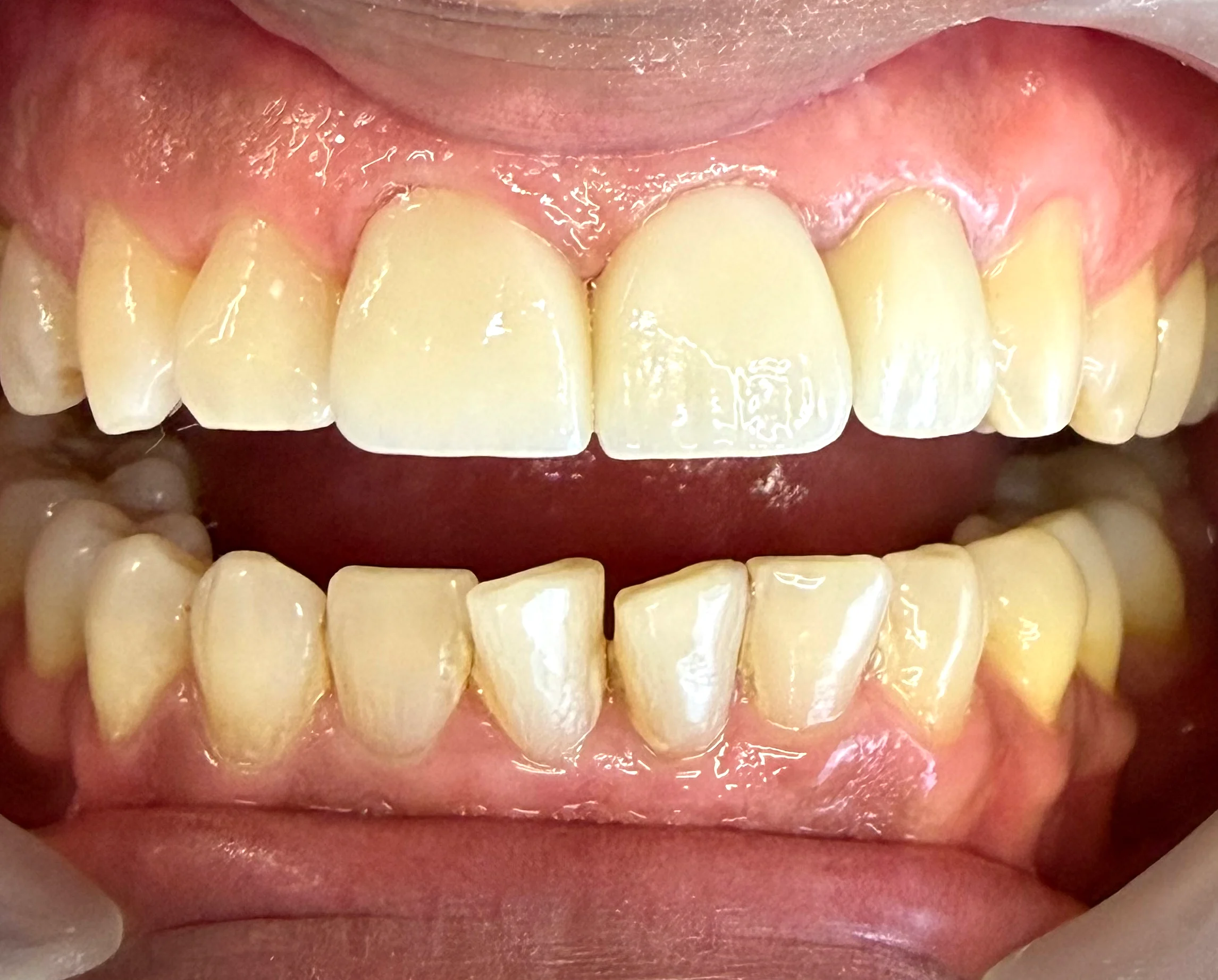
Metal-ceramic crown: the classic, proven option
The metal-ceramic crown has a metal base covered with porcelain. It is the traditional crown, with decades of use behind it. What you should know:
- Proven and functional: it has been on the market a long time, it is strong, and it remains a good option for some bridges and back teeth.
- Usually more affordable: it generally costs less than zirconia, which makes it attractive on budget.
- It takes longer to make: it requires more steps and more try-ins than a zirconia crown, so it usually needs more appointments.
- The alloy matters: ideally it should use a noble metal. Depending on the alloy there is more or less risk of oxidation and of staining the gum margin over time.
- The gray line at the gum: if the gum recedes, the metal base can show as a dark line at the margin, especially on front teeth.
- It can complicate medical imaging: depending on the metal, some MRI scans may require removing the prosthesis, which is not the case with zirconia.
- Risk of chipping: the porcelain covering the metal can chip over time or under bite load.
When is each one right?
- Zirconia is better for: teeth visible when you smile, patients seeking the most natural aesthetics, bruxism, crowns on implants, or if you simply prefer a crown with no metal base.
- Metal-ceramic can work when: budget is the priority and the tooth is not in the visible zone, or for some posterior bridges. In the aesthetic zone zirconia is preferred today, precisely because of the gray line issue.
One important note so the topics do not get mixed up: here we are talking about the material of the crown you see in your mouth. If what you are evaluating is the material of the implant (the screw that goes into the bone), that is a different decision and I explain it in titanium versus zirconia implants.
So what now? Your case, your material
The best crown is the one that fits your tooth, your bite and your budget, not the one that sounds best. When the crown is part of an aesthetic rehabilitation, we plan it within your smile design in Medellín; when it goes on implants or serves as a functional restoration, it belongs to fixed prosthetics on implants. Write to me on WhatsApp, tell me about your case, and I will tell you clearly which material is right and why.
Frequently asked questions
▸Which is better, a zirconia crown or a metal-ceramic crown?
Neither is better. Zirconia has no metal base, is more aesthetic and very strong. Metal-ceramic is the classic option and is usually more affordable, but over the years it can show a dark line at the gum margin. The decision depends on your bite, the aesthetics and the budget. Both are used and both are good options: with excellent preparation and fabrication technique, excellent results are achieved.
▸How long does a zirconia crown last?
How long a crown lasts depends on the care it receives, which is the same as for natural teeth. Scientific studies indicate they can last more than 10 years with good maintenance. Zirconia does not pick up pigment, does not stain and holds its color, and it is very strong. Just like the tooth or the implant underneath, it needs good hygiene and check-ups every 6 months, and that is very important.
▸Does a zirconia crown look more natural than metal-ceramic?
Generally yes, especially on visible teeth. With no metal base, zirconia avoids the gray line that metal-ceramic can show at the gum margin over time. Its white structure masks dark backgrounds (a metal post or a stained tooth, for example) and, with characterized porcelain or with translucent multilayer zirconias, it reproduces the color and translucency of a natural tooth. That is why zirconia is preferred in the aesthetic zone today, and it is decided at the evaluation according to your case.
▸How much does a zirconia crown cost in Medellín?
The cost of a crown depends on the material and on whether it goes on a tooth or on an implant, and the exact figure is confirmed at the evaluation. As a reference, in Medellín a crown costs from 1,500,000 to 3,000,000 Colombian pesos or more, roughly $480 to $970 USD, versus $1,500 to $2,500 USD for the same crown in the United States.
▸Does a zirconia crown let light through like a natural tooth?
Zirconia is not transparent like enamel, it is more opaque, and in many cases that is an advantage: its white structure covers dark backgrounds, for example a metal post, a pigmented tooth or staining. For a natural look, the anatomy is characterized with porcelain over that white base, and today there are translucent and multilayer zirconias that mimic the exact color and translucency of a natural tooth. So zirconia is both highly aesthetic and able to mask what you do not want seen.
▸Is a zirconia crown useful if I have a post or a stained tooth?
Yes, that is one of its best indications. Because zirconia is opaque, it hides the dark color of a metal post or of a pigmented or root-canal treated tooth, something a more translucent crown does not always achieve. That prevents the gray tone underneath from showing through the crown.
▸Can I have an MRI with a zirconia crown?
Yes, it is biocompatible and does not need to be removed. With metal-ceramic, depending on the prosthesis design, some scans may require removing the prosthesis.
▸Does a metal-ceramic crown oxidize or stain the gum?
It can happen, and it depends on the alloy. Ideally it should use a noble metal, because non-noble alloys carry a higher risk of oxidation and of staining the gum margin over time, plus the possible gray line if the gum recedes. Zirconia, having no metal alloy, does not present this problem.
▸Which crown takes longer to fabricate, zirconia or metal-ceramic?
Metal-ceramic usually requires more steps and more try-ins, so the process takes longer. The zirconia crown, with a digital workflow, tends to be resolved in fewer appointments.

Dra. Carolina Macareno
Rehabilitadora Oral · Especialista en Implantes
Oral Rehabilitation specialist from Universidad CES. Over 17 years transforming smiles in Medellín, Colombia.
Premium for your smile
Zirconia crowns and premium veneers from $550 USD. Premium lab.